
table of contents
Managing blood sugar can feel overwhelming, but understanding how it works is the first step toward better health. If you have diabetes, or are at risk, you might wonder: Why does the body need sugar? What do my blood sugar readings really mean? How can I avoid highs and lows?
This guide will break it all down—so you can take control of your blood sugar with confidence.
Why Does the Body Need Sugar?
Sugar (glucose) is the body’s primary energy source. When we eat foods containing carbohydrates, our body breaks them down into glucose, which enters the bloodstream.
Carbohydrates come in different forms:
- Simple sugars (monosaccharides) – Found in fruits and honey (e.g., glucose, fructose).
- Double sugars (disaccharides) – Found in table sugar, dairy, and some processed foods.
- Complex carbohydrates (polysaccharides) – Found in whole grains, potatoes, and legumes.
Once in the blood, glucose needs insulin to enter the cells, where it is used for energy. Without enough insulin, or if the body becomes resistant to it, glucose stays in the bloodstream, leading to high blood sugar levels.
Understanding Blood Sugar Levels
When people talk about blood sugar, they are referring to glucose levels in the blood. These levels naturally rise after eating and drop when the body uses glucose for energy.
How Is Blood Sugar Measured?
Blood sugar can be measured in two common units:
✅ mg/dL (milligrams per deciliter) – Common in the U.S.
✅ mmol/L (millimoles per liter) – Used in many other countries
In addition to daily blood sugar readings, doctors also look at HbA1c, a 3-month average of blood sugar levels, expressed as a percentage.
Key Blood Sugar Tests
Doctors use different blood sugar tests to diagnose and monitor diabetes:
- Fasting Blood Sugar (FBS): Measures glucose levels after at least 8 hours of fasting.
- HbA1c (Long-Term Blood Sugar): Shows average blood sugar levels over the past 3 months.
- Oral Glucose Tolerance Test (OGTT): Measures how well the body handles glucose after drinking a sugary solution.
- Random Blood Sugar Test: Measures blood sugar at any time. If abnormally high, further testing is needed.
What Is Prediabetes?
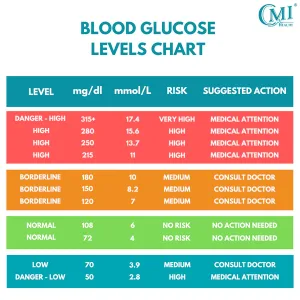
Prediabetes means blood sugar is higher than normal but not high enough to be diagnosed as diabetes. It’s a warning sign that you may develop type 2 diabetes in the future.
| Condition | Fasting Blood Sugar | HbA1c (3-Month Avg.) | Blood Sugar 2 Hours After OGTT |
| Normal | Below 100 mg/dL | Below 5.7% | Below 140 mg/dL |
| Prediabetes | 100–126 mg/dL | 5.7–6.5% | 140–200 mg/dL |
| Diabetes | Above 126 mg/dL | Above 6.5% | Above 200 mg/dL |
Even if you are diagnosed with prediabetes, it does not mean diabetes is inevitable! Healthy lifestyle changes can often reverse prediabetes and prevent type 2 diabetes.
When Does High Blood Sugar Indicate Diabetes?
A fasting blood sugar over 126 mg/dL (7.0 mmol/L) is considered diabetic. However, if post-meal blood sugar remains consistently high, it could also indicate diabetes.
A random blood sugar test above 200 mg/dL (11.1 mmol/L) is not always a diagnosis but suggests further testing is needed.
Once diagnosed, patients work with their diabetes care team to set personalized blood sugar targets based on their treatment plan, health conditions, and lifestyle.
What Affects Blood Sugar Levels?
Many factors influence blood sugar, including:
✅ Food choices – Carbohydrates raise blood sugar, while fiber and protein help stabilize it.
✅ Physical activity – Exercise lowers blood sugar by improving insulin sensitivity.
✅ Illness and infections – Fever, flu, and stress can increase blood sugar.
✅ Medications – Steroids and thyroid medications can affect glucose levels.
✅ Alcohol – Can lower blood sugar, sometimes leading to dangerous drops.
Tracking your blood sugar regularly helps you understand how different factors affect your body.
When Blood Sugar Gets Out of Control
Even if you manage diabetes well, unexpected events—illness, exercise, stress—can cause blood sugar to rise too high (hyperglycemia) or drop too low (hypoglycemia).
Hypoglycemia (Low Blood Sugar)
Hypoglycemia occurs when too much insulin causes blood sugar to drop dangerously low. Symptoms include:
⚠ Shaking
⚠ Sweating
⚠ Dizziness
⚠ Extreme hunger
⚠ Anxiety or confusion
🆘 What to do: Eat or drink fast-acting sugar, such as glucose tablets or fruit juice. If severe, seek emergency medical help.
Hyperglycemia (High Blood Sugar)
Hyperglycemia happens when too little insulin is available, causing too much sugar in the blood. Symptoms include:
⚠ Extreme thirst
⚠ Frequent urination
⚠ Fatigue
⚠ Nausea
🆘 What to do: If blood sugar remains high, adjust treatment with your doctor to prevent complications. In extreme cases, high blood sugar can lead to diabetic ketoacidosis (DKA), requiring emergency care.
How to Keep Blood Sugar in Check
The goal of managing diabetes is to keep blood sugar within a healthy range, prevent complications, and live a normal, active life.
Tools for Monitoring Blood Sugar
📍 Blood Glucose Meters – A small fingerstick test provides an instant reading.
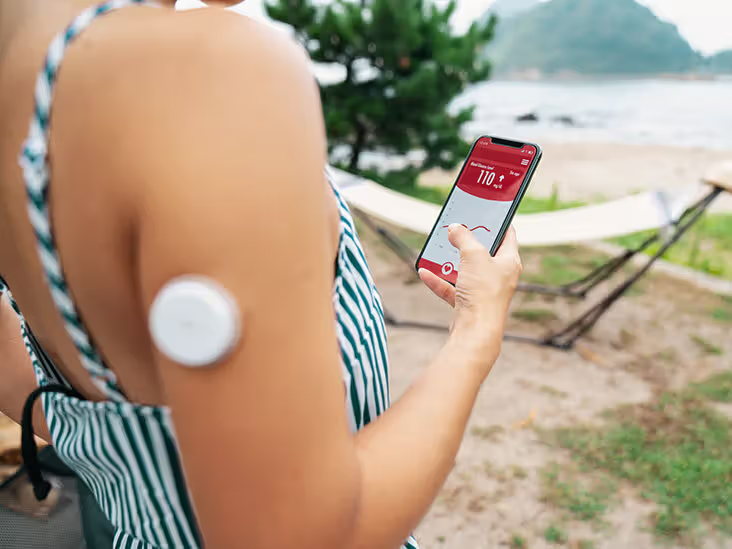
📍 Continuous Glucose Monitors (CGM) – A sensor measures blood sugar 24/7, showing trends in real-time.
Tracking your blood sugar regularly helps you stay in control and adjust treatment as needed.
Keeping a Blood Sugar Journal
A diabetes journal (paper or app-based) helps track:
✅ Blood sugar readings
✅ Food intake
✅ Exercise
✅ Medication doses
✅ Stress levels
Logging these details allows you and your doctor to adjust treatment and improve blood sugar control.
Take Charge of Your Health with Glucofit News!
Want the latest updates on blood sugar management, diabetes research, and lifestyle tips?
📩 Sign up for Glucofit News—Stay informed and stay healthy!
By understanding how blood sugar works, you can take steps to manage it effectively. Whether you’re newly diagnosed or managing diabetes for years, every small effort counts toward a healthier future. 💙